1. Why Circuit Breaker Tripping Matters
If your circuit breaker keeps tripping, it’s not just an inconvenience — it’s a warning sign. While it might be tempting to reset it and move on, repeated tripping usually means something isn’t right in your electrical system.
The good news is that a circuit breaker is designed to trip. It’s a built-in safety device that protects your home from overheating wires, damaged appliances, and potential electrical fires. When a breaker trips, it’s doing its job by shutting off power before something dangerous happens.
An occasional trip can be normal, especially if multiple high-power devices are running at once. However, frequent or unexplained tripping should never be ignored. Understanding why it’s happening can help you decide whether it’s a simple fix — or a situation where calling a licensed electrician is the safest option.
2. What a Circuit Breaker Is Protecting Your Home From
Your circuit breaker acts as a gatekeeper for your home’s electrical system. When it detects a problem, it cuts power to prevent damage and serious safety risks. Some of the main dangers it protects against include:
Overloaded circuits
When too many devices draw power from the same circuit, the wiring can overheat. The breaker trips to stop that heat buildup before it becomes dangerous.
Overheating wires
Old, damaged, or improperly installed wiring can heat up quickly. Without a breaker shutting things down, this can lead to melted insulation or fires inside walls.
Electrical fires
Electrical issues are a common cause of house fires. A tripping breaker helps prevent sparks and excessive heat that could ignite nearby materials.
Damage to appliances and electronics
Power surges and electrical faults can shorten the lifespan of appliances or destroy sensitive electronics. The breaker helps limit that damage by cutting power when something goes wrong.
In short, a tripping breaker isn’t the problem — it’s the symptom. The real issue is whatever triggered it in the first place.
3. Common Reasons Your Circuit Breaker Keeps Tripping
There are several common causes behind a tripping circuit breaker. Some are relatively simple, while others can point to more serious electrical problems that need professional attention.
Overloaded circuit
This is the most common reason a breaker trips. It happens when too many devices are running on the same circuit at the same time. High-power appliances like space heaters, microwaves, air fryers, hair dryers, and window AC units can easily overload a circuit. When the electrical demand exceeds what the circuit can safely handle, the breaker shuts off the power.
Short circuit
A short circuit occurs when a hot wire comes into contact with a neutral wire. This causes a sudden surge of electricity, which can trip the breaker immediately. Short circuits are dangerous and may be accompanied by burning smells, scorch marks, or a loud popping sound. This type of issue should always be inspected by a licensed electrician.
Ground fault
A ground fault is similar to a short circuit, but instead of contacting a neutral wire, the hot wire touches a grounded surface. These faults are common in areas with moisture, such as kitchens, bathrooms, garages, and outdoor outlets. Ground faults are especially hazardous because they increase the risk of electric shock, which is why many of these circuits are protected by GFCI devices.
Faulty appliances or wiring
Sometimes the issue isn’t the circuit itself but something plugged into it. An appliance with damaged internal wiring, a worn-out power cord, or loose connections inside an outlet can cause repeated breaker trips. Older homes with aging or outdated wiring are especially prone to this type of problem.
4. Quick Things Homeowners Can Safely Check
Before calling an electrician, there are a few safe and simple steps homeowners can take to help identify the problem. Safety should always come first — if anything seems unusual or unsafe, stop and call a professional.
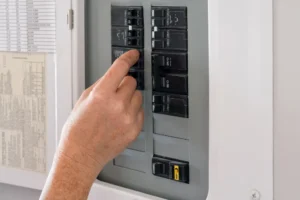
Start by unplugging all devices connected to the circuit that keeps tripping. Once everything is unplugged, reset the breaker. If it stays on, plug items back in one at a time. If the breaker trips again after plugging in a specific device, that appliance may be the cause.
Pay attention to warning signs such as warm outlets, flickering lights, buzzing sounds, or a burning smell. These can indicate a more serious issue behind the walls and should not be ignored.
Avoid forcing a breaker to stay on or repeatedly resetting it without addressing the cause. Never attempt to open your electrical panel or perform wiring repairs unless you are properly trained. Electrical systems can be dangerous, and even small mistakes can lead to serious injury or fire.
5. When You Should Call an Electrician Immediately
While some breaker trips are minor, there are situations where calling a licensed electrician right away is the safest choice. Ignoring these warning signs can put your home and family at risk.
You should contact an electrician if your circuit breaker trips repeatedly, even after unplugging devices and resetting it. A breaker that won’t stay on usually indicates a deeper electrical issue that needs professional diagnosis.
Call an electrician immediately if you notice a burning smell, sparks, or smoke coming from outlets, switches, or the electrical panel. These are serious warning signs of overheating or damaged wiring.
Other red flags include warm or discolored outlets, buzzing or crackling sounds, and breakers that trip as soon as they are reset. If the breaker trips even when nothing is plugged into the circuit, the problem is likely within the wiring itself and should not be handled as a DIY fix.
6. Why Ignoring a Tripping Breaker Is Risky
Repeatedly resetting a tripping breaker without fixing the underlying problem can lead to serious consequences. A breaker trips to protect your home — bypassing that protection increases the risk of electrical hazards.
One of the biggest dangers is fire. Overheated wires and electrical faults can smolder behind walls long before visible flames appear. By the time signs are obvious, significant damage may already be done.
Ignoring the issue can also damage appliances and electronics. Electrical surges and unstable power can shorten the lifespan of expensive devices or cause them to fail unexpectedly.
Finally, small electrical problems tend to get worse over time. What starts as an overloaded circuit can turn into damaged wiring or a costly repair if left unaddressed. Taking action early not only improves safety but can also save money in the long run.
7. How a Professional Electrician Fixes the Problem
When you call a licensed electrician for a tripping circuit breaker, the goal isn’t just to reset it — it’s to find and fix the root cause. A professional electrician starts with a thorough inspection of your electrical panel, circuits, outlets, and connected devices.
This may include testing the electrical load on the circuit to see if it’s being overloaded, checking for loose or damaged wiring, and inspecting outlets and switches for hidden faults. If an appliance is causing the issue, the electrician can help identify it and recommend a safe solution.
In some cases, the fix may involve upgrading a circuit, replacing a faulty breaker, installing GFCI or AFCI protection, or updating outdated wiring. These repairs not only stop the breaker from tripping but also improve the overall safety and reliability of your home’s electrical system.
8. Conclusion: Don’t Ignore the Warning Signs
A circuit breaker that keeps tripping is your home’s way of telling you something isn’t right. While it may be tempting to ignore the problem or keep resetting the breaker, doing so can put your home, your appliances, and your safety at risk.
Occasional tripping can be normal, but repeated or unexplained trips should always be taken seriously. Understanding the cause helps you know when a simple adjustment is enough — and when it’s time to call a professional.
If you’re unsure why your circuit breaker keeps tripping, a licensed electrician can inspect your system, identify the issue, and make sure your home is safe and up to code. Addressing the problem early gives you peace of mind and helps prevent costly repairs down the road.